G. Steve Journal

Reflections on photography, art, beauty and the natural landscape.

  • Worth The Journey

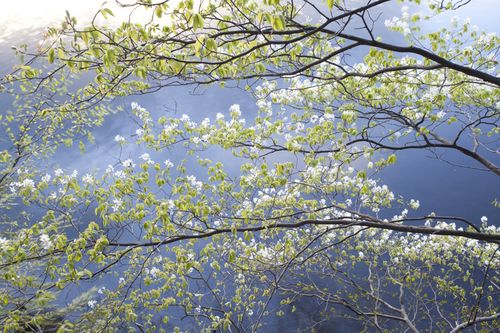
    Henry David Thoreau's observations about the singular beauty of an ice-covered and sunlit tree might well be applied to any number of natural phenomena, like the delicate and transitory tree blossoms I encountered along the banks of Lake Mohonk.  Thoreau writes:

    Many times I thought that if the particular tree… were the only one like it in the country, it would be worth the journey across the continent to see it…. But instead of being confined to a single tree, this wonder was as cheap and common as the air itself.
     

    TreeBloom
  • What The Road Passes By

    Years ago, while traveling through the southwest US,  I met the very talented and personable photographer DeWitt Jones who was shooting for NATIONAL GEOGRAPHIC at the time.  I was just starting to take photography more seriously and was impressed by Jones' friendliness and professionalism. 

    In the course of the day spent shooting, he showed me a book he had published a few years prior entitled: "What The Road Passes By" — a photo essay on the hidden beauty lurking just off the beaten path.

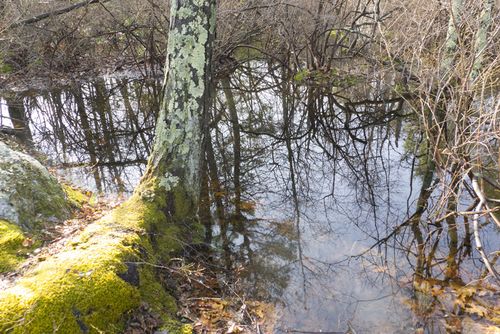
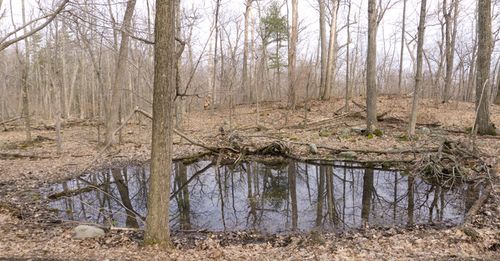
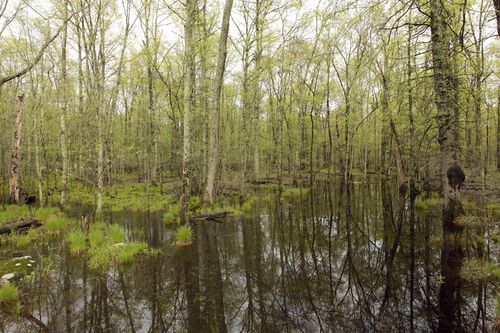
    I thought of Jones and that book last night when I stopped along the side of the road in a suburban neighborhood to capture some spring images of a flooded woodland scene.  I remarked to the homeowner who came out to see what I was up to that, without knowing the story behind it, most people looking at the images would assume they were made in a remote location far from civilization.

    It's what the road passes by….

    _MG_9407
  • Spring

    "One attraction in coming to the woods to live was that I should have leisure and opportunity to see the spring come in."                                

                                -  Henry David Thoreau

    P1000184
  • The Act of Creation

    Marcelo Gleiser, writing on an NPR blog about laughter and health, observes that:

    Arthur Koestler, in The Act of Creation, develops the argument that humor and creativity have a lot in common: in a good joke, there is a rupture of the logic, a point where the narrative departs from its natural flow and takes a sharp turn to the unexpected. That's when we laugh. You can't control it, it just happens. If you retrace your steps and explain the joke to someone who didn't get it, it isn't funny anymore.

    I think that may be the reason many of us find contemporary works of art less than satisfying: we feel intuitively that if the work needs to be explained, the essence is lost — perhaps it was never there to begin with.

    P-0403
  • Let Them Be Left

    What would the world be, once bereft
    Of wet and wildness? Let them be left,
    O let them be left, wildness and wet;
    Long live the weeds and the wilderness yet.

                                     Gerard Manley Hopkins


    P1000166
  • That is Why…

    I came across the following quote by composer Jean Sibelius from a 1919 interview and thought the sentiment could apply equally well to any non-verbal creative endeavor: dance, painting, photography…etc.:

    If I could express the same thing with words as with music, I would, of course, use a verbal expression.  Music is something autonomous and much richer.  Music begins where the possibilities of language end.  That is why I write music.

  • Freedom Redux

    The peripatetic fashion photographer Bill Cunningham is the subject of a new documentary film about his life and work.  He's especially well-known to readers of the NEW YORK TIMES for his candid snapshots of everyday New Yorkers who exhibit, in Cunningham's estimation, a sense of style.

    After decades of work, he clearly still enjoys what he does and has cultivated a very bohemian, free-spirit approach to his craft.  Talking about the time he refused to take money for his work…, Cunningham says: “You see, if you don’t take money, they can’t tell you what to do, kid. … Money’s the cheapest thing. Liberty, freedom is the most expensive.”

    3056
  • Earth’s Eye

    I posted this image to the gallery Facebook page as emblematic of the space between seasons – no longer winter but not quite spring. The landscape is muted and monochromatic here in the northeast and not many images suggest themselves.

    The reflections in this vernal pool deep in the woods provided a nice counterpoint to an otherwise homogenous scene.  It's shape and setting, fringed by trees, recalls Thoreau's observation:

    "A lake is the landscape’s most expressive feature. It is earth’s eye…"


    6051A


  • Receptive

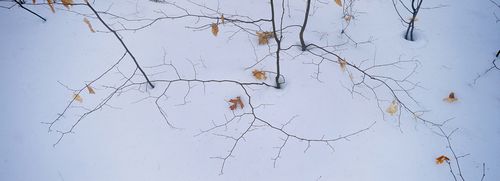
    Many of the images I capture when I venture out I could not have planned. Even when I do have a certain type of image in mind – think dramatic landscape – it's more likely that I'll return with something I had not envisioned.

    If I am receptive to the environment I am passing through, I may be lucky enough to "see" a unique pattern or scene that gently impinges on my consciousness until I respond by framing it in the camera's viewfinder.

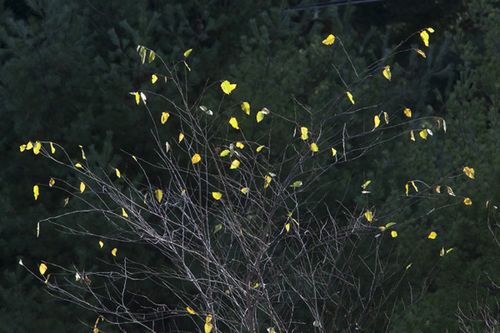
    Out skiing this past season I paused to catch my breath and this delicate spray of branches just off the trail caught my attention, one of an infinite number of equally captivating vignettes….


    P-0415
  • Transcendent

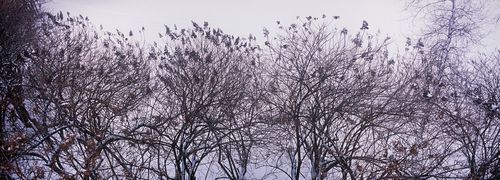
    I've been photographing fewer iconic landscapes of the area  — as of late, subtle details seem to attract my attention more and I find them compelling in a way that is different than the attraction of the dramatic landscape — more intimate – transcendent.

    Here is a recent favorite:

    P-0410