G. Steve Journal

Reflections on photography, art, beauty and the natural landscape.

Category: New Paltz, NY

  • Art Is Art

    I came across this tidbit from Groucho Marx that sounded suspiciously like someone vainly trying to compose an erudite artist's statement….

    "Well, art is art, isn't it? Still, on the other hand, water is water! And east is east and west is west and if you take cranberries and stew them like applesauce they taste much more like prunes than rhubarb does. Now, uh… now you tell me what you know." 

    Thanks, Groucho!

  • No Words For

    We've written previously about the notion of art's immediate effect on the viewer (or listener) as one that precedes intellectual apprehension — we "feel" it before we can describe it.

    Now there is a growing scientific consensus that this precognitive response is a real one, triggered by the release of so-called "feel-good" chemicals in the brain like dopamine – not unlike the feelings one has towards a loved one.

    That's not to say that Art as a category of human endeavor is not able to accommodate other ways of apprehending, for example the more intellectual understanding required of a conceptual artwork.  But it's probably not a stretch to suggest that the genesis of art was the desire to express oneself in a different way.

    I found I could say things with color and shape that I couldn't say any other way – things I had no words for.
                                                                                                                                 Georgia O'Keefe

  • Being There

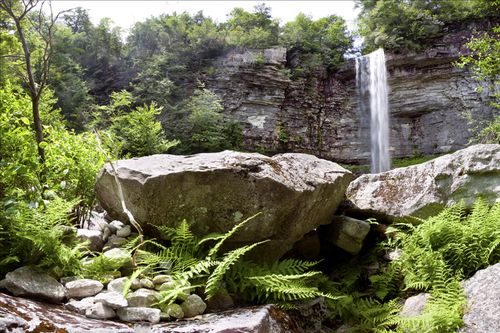
    We're replacing the large four-panel presentation (called a polyptych) on the back wall of the gallery and, when completed, it will present a scene at a scale – about 10' x 7' – that will give the appearance to the viewer of actually standing at the base of the falls.

    Years ago, in the airport in Fort Lauderdale, Florida, we saw a giant wall display of a Clyde Butcher scene from the Everglades so large and captivating that it transcended the notion of a "documentary photograph" and, for a moment, it was almost like being there.

    So, although normally we'd be less inclined to highlight this type of image – an apparent documentation of a natural scene – there is something about the very tactile qualities found in the elements of this scene – delicate ferns, textured rock, flow of water – and the sheer size of the presentation that warranted the decision and, we hope, will evoke in viewers a response similar to the one Butcher's image had on me years ago.
     

    4053x4


  • Keep It Simple

    I'm always interested in learning about how artists of all stripes approach the creative process.

    There was a very well done piece about the singer-songwriter Paul Simon in the recent issue of ROLLING STONE (May 12, 2011) where he spoke about how he composes his songs, and it struck me that his very cogent and insightful comments could be applied to many creative endeavors:

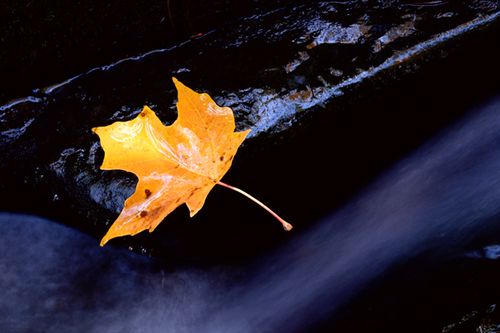
    Make it as simple as you can.  Take a complex thing and make it as simple as you possibly can.  You're lucky if you ever attain it.  What I'm interested in within art is beauty…. If it's beautiful, that produces an openness of feeling and generosity.


    029 Leaf, Mossy Brook


  • Worth The Journey

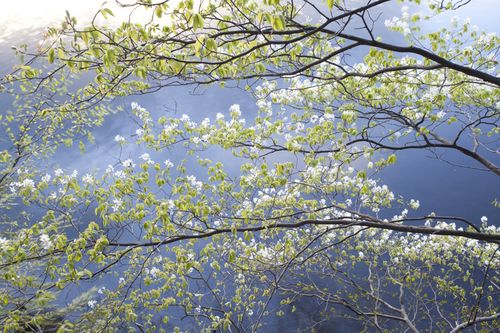
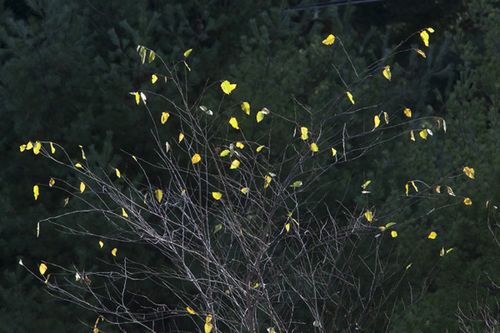
    Henry David Thoreau's observations about the singular beauty of an ice-covered and sunlit tree might well be applied to any number of natural phenomena, like the delicate and transitory tree blossoms I encountered along the banks of Lake Mohonk.  Thoreau writes:

    Many times I thought that if the particular tree… were the only one like it in the country, it would be worth the journey across the continent to see it…. But instead of being confined to a single tree, this wonder was as cheap and common as the air itself.


    TreeBloom
  • What The Road Passes By

    Years ago, while traveling through the southwest US,  I met the very talented and personable photographer DeWitt Jones who was shooting for NATIONAL GEOGRAPHIC at the time.  I was just starting to take photography more seriously and was impressed by Jones' friendliness and professionalism. 

    In the course of the day spent shooting, he showed me a book he had published a few years prior entitled: "What The Road Passes By" — a photo essay on the hidden beauty lurking just off the beaten path.

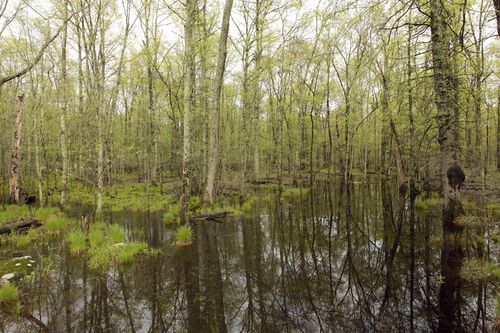
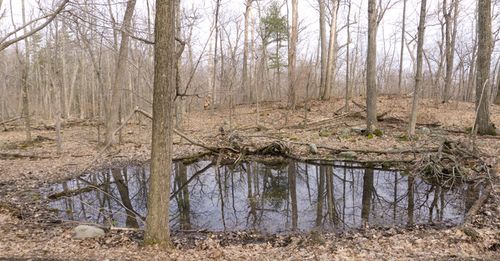
    I thought of Jones and that book last night when I stopped along the side of the road in a suburban neighborhood to capture some spring images of a flooded woodland scene.  I remarked to the homeowner who came out to see what I was up to that, without knowing the story behind it, most people looking at the images would assume they were made in a remote location far from civilization.

    It's what the road passes by….

    _MG_9407
  • Spring

    "One attraction in coming to the woods to live was that I should have leisure and opportunity to see the spring come in."                                

                                -  Henry David Thoreau

    P1000184
  • Let Them Be Left

    What would the world be, once bereft
    Of wet and wildness? Let them be left,
    O let them be left, wildness and wet;
    Long live the weeds and the wilderness yet.

                                     Gerard Manley Hopkins


    P1000166
  • Freedom Redux

    The peripatetic fashion photographer Bill Cunningham is the subject of a new documentary film about his life and work.  He's especially well-known to readers of the NEW YORK TIMES for his candid snapshots of everyday New Yorkers who exhibit, in Cunningham's estimation, a sense of style.

    After decades of work, he clearly still enjoys what he does and has cultivated a very bohemian, free-spirit approach to his craft.  Talking about the time he refused to take money for his work…, Cunningham says: “You see, if you don’t take money, they can’t tell you what to do, kid. … Money’s the cheapest thing. Liberty, freedom is the most expensive.”

    3056
  • Earth’s Eye

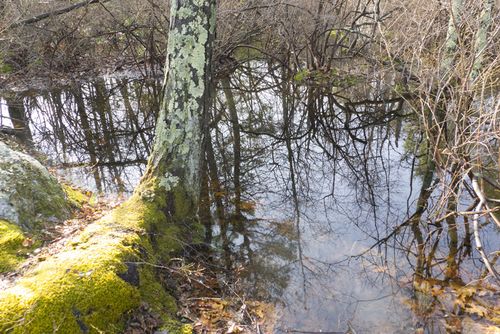
    I posted this image to the gallery Facebook page as emblematic of the space between seasons – no longer winter but not quite spring. The landscape is muted and monochromatic here in the northeast and not many images suggest themselves.

    The reflections in this vernal pool deep in the woods provided a nice counterpoint to an otherwise homogenous scene.  It's shape and setting, fringed by trees, recalls Thoreau's observation:

    "A lake is the landscape’s most expressive feature. It is earth’s eye…"


    6051A