G. Steve Journal

Reflections on photography, art, beauty and the natural landscape.

Author: G. Steve Jordan

  • Not Feeling

    Came across some thoughts expressed by poet e.e. cummings on being true to one's inner voice and, in keeping with one of the themes of this blog, namely to trust creative instinct over intellect, I thought this pithy observation relevant not only to poetry, but to the creative process in general:

    A lot of people think or believe or know they feel — but that’s thinking or believing or knowing; not feeling. And poetry is feeling — not knowing or believing or thinking.

    [via]

    3068
  • Imagination

    “I call that man rich,” Henry James’s Ralph Touchett observes in “Portrait of a Lady,” “who can satisfy the requirements of his imagination.”

    One may suppose that, for the creative person, meaningful and unique artistic expression is the most compelling requirement…

    257
  • Poetic Vehicle

    As a follow up to our last post, here are filmmaker Ken Burns' thoughtful and enlightening observations on how to tell a story:

    In every film we’ve tried to look for a way to allow the audience space to leave the world that they are in…. How do I transit you from your incredibly busy and compelling life…and bring you to this moment.

    You can’t force people into it by exaggerated drama, you need to say ‘ This is what happened, this is where we’re going to go, will you take my hand… can I lead you to that place?’

    You have the facts in there but you deliver it in a kind of poetic vehicle that makes sense to people.

  • What Life Is About

    Just completed an online class with filmmaker Ken Burns and it was as enlightening and provocative as one would expect from this hyper-articulate and thoughtful genius of storytelling.

    He’s that rare individual who is persistent to a fault, leaving no stone unturned in his art, able to attend to details at the most intimate level and then, in a heartbeat, step all the way back from a project to objectively evaluate the big picture.

    Though Burns spends time discussing and illustrating some of his signature techniques, the real value of the class is in his refreshing take on balancing the inexorable tension between art and craft to achieve a synergy that’s somehow greater than merely the sum of the components.

    Particularly noteworthy were his observations on how to strike that delicate balance:

    That’s what art is… something else…throw away your crutches, throw away the simple things, the obvious illustration and try to achieve something that’s a …little bit more difficult, and dissonant, and you might find new meaning in that.

    If you’re corrigible to the end, then you have the opportunity for serendipity and surprise…. that’s what life is about.

    He concludes with his motivation for pursuing the path he’s chosen by quoting Transcendentalist author Ralph Waldo Emerson in his essay, “Self Reliance”:

    I will do…whatever inly rejoices me…
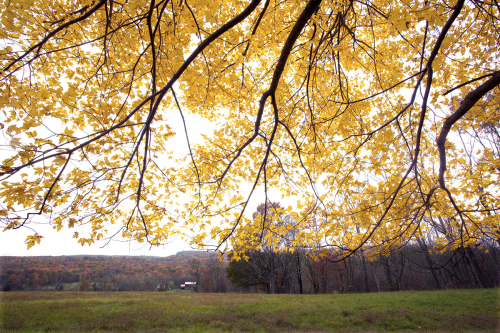
     

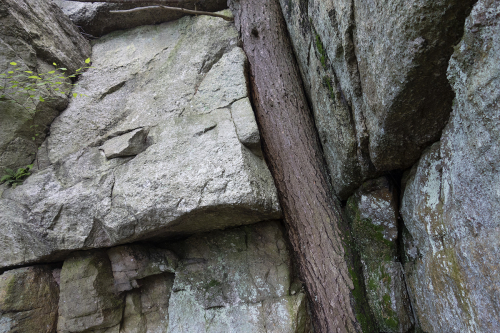
    M-0056Flt
  • Logically Incommensurate

    It can be awkward to try and describe using language what motivates one to create a particular work of art. Often one of the motivating factors is exactly that inability –– if the essence of the artwork could be described in words, perhaps the desire to express it otherwise might not exist. Philosopher Suzanne Langer perfectly describes why language is wanting in this regard:

    Every work of art expresses, more or less purely, more or less subtly, not feelings and emotions which the artist has, but feelings and emotions which the artist knows…

    Such knowledge is not expressible in ordinary discourse. The reason for this ineffability is not that the ideas to be expressed are too high, too spiritual, or too anything-else, but that the forms of feeling and the forms of discursive expression are logically incommensurate, so that any exact concepts of feeling and emotion cannot be projected into the logical form of literal language. Verbal statement, which is our normal and most reliable means of communication, is almost useless for conveying knowledge about the precise character of the affective life. Crude designations like “joy,” “sorrow,” “fear,” tell us as little about vital experience as general words like “thing,” “being,” or “place,” tell us about the world of our perceptions.

    [via]


    2195
  • Authentic and True


    The late author David Foster Wallace was interviewed by Charlie Rose in 1997 where they discussed filmmaker David Lynch’s movie “Blue Velvet” and how it helped to define a new vision in cinema:

    Imagine you're a "hypereducated avant-gardist in grad school learning to write." But at your grad school, "all the teachers are realists. They're not at all interested in postmodern avant-garde stuff." They take a dim view of your writing, you assume because "they just don't happen to like this kind of aesthetic," but actually because your writing isn't very good. Amid all this, with you "hating the teachers but hating them for exactly the wrong reasons," David Lynch's Blue Velvet comes out. Not only does it belong to "an entirely new and original kind of surrealism," it shows you that "what the really great artists do is they're entirely themselves. They've got their own vision, their own way of fracturing reality, and that if it's authentic and true, you will feel it in your nerve endings."

    [via]


    Fractured
  • Clever

    An ongoing theme in this blog is the exploration of the role intellect vs. emotion play in creative endeavors — a topic referenced in a 1996 radio interview I came across with late writer David Foster Wallace. This particular observation piqued my interest since it aptly describes the raison d'etre of much contemporary photography… indeed, art in general:

    When you see student’s work where the point, whether it’s stated or not, is basically that they’re clever; and to try to articulate to the students how empty and frustrating it is for a reader to invest their time and attention in something that they feel the agenda is basically to show you that the writer’s clever.

  • Gives You Access

    Actor Ethan Hawke was a recent guest on Real Time with Bill Maher and his extemporaneous reflections on art and it's impact on society ring true:

    Every once in a while a writer, a really fine writer, can give voice to something that we’re all thinking about, it’s like an unanswerable question… you’re watching the world and you can’t make sense out of it, and art.. a great song, a great piece of music, a great movie, can ask the question that will vibrate within you— it doesn’t give you an answer, its just gives you access to your own voice…


  • In The Heart

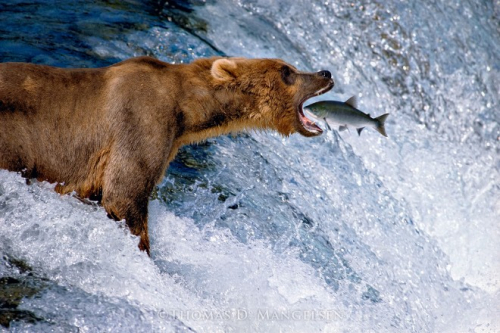
    One of the segments on last night's "60 Minutes" was about wildlife photographer Thomas Mangelsen.  I've never tried wildlife photography, or even had that much interest in it, but as the story made clear Mangelsen has elevated the craft to levels rarely before seen.

    In one scene from the field, Manglesen and his friend, primatologist Jane Goodall, admire the migration of Sandhill Cranes — together they are working to ensure the protection of these birds.

    Goodall observes that:

    One of the qualities that I love about Tom is his passion, and it's when you have that kind of passion and that kind of commitment that you're more likely to get other people involved… because we can never win an argument by appealing to people's heads it's got to be in the heart, and I use the power of storytelling and writing and Tom uses the power of images.

    [via]


    Mangelsen Bear & Salmon
  • Tried to Engineer

    I came across this observation by the late writer David Foster Wallace and it reminded me that when I used to head out on photo excursions, only after I stopped seeking whatever it was I hoped to find did I encounter the gift that had been there all along:

    Almost nothing important that ever happens to you happens because you engineer it. Destiny has no beeper; destiny always leans trenchcoated out of an alley with some sort of pssstt that you usually can't even hear because you're in such a rush to do something important you've tried to engineer.


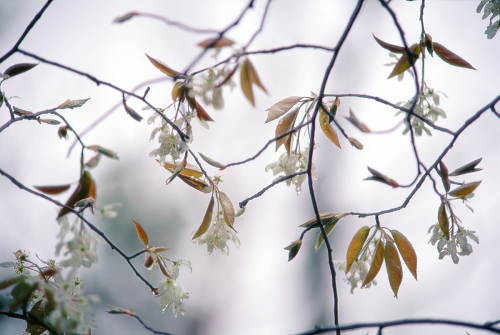
    056 Spring Buds