G. Steve Journal

Reflections on photography, art, beauty and the natural landscape.

Author: G. Steve Jordan

  • Simply Contemplate

    I love this spot-on advice from the late Sister Wendy Beckett, the nun who had an art appreciation show on TV years ago. I'd suggest that this frame of mind is equally important to cultivate during the creation of art as well:

    Faced with the [art]work, we must try to dispel all the busy suggestions of the mind and simply contemplate the object in front of us. The mind and its facts come in later, but the first, though prepared, experience should be as undefended, as innocent, and as humble as we can make it.

    [via]

  • Flicker of Eternity

    Just read a compelling essay in the NY TIMES by Kate Bowler, a professor at Duke who has cancer and shares how the disease has caused her to reevaluate her life. 

    I cannot imagine what it is like to be in her shoes, but her description reminds me of those times wandering the woods searching for a perfect image and, by so doing, experiencing the timelessness of the natural world more fully:

     In losing my future, the mundane began to sparkle. The things I love — the things I should love — become clearer, brighter. This is transcendence, the past and the future experienced together in moments where I can see a flicker of eternity.

    [via]

  • Absorbed By Beauty

    “The hours when the mind is absorbed by beauty are the only hours when we really live, so that the longer we can stay among these things so much the more is snatched from inevitable Time.”

                                                                                        –– Richard Jeffries

    [via]

    3240v2
  • In The Reflection

    Creativity blogger Jocelyn Gliel recently highlighted advice from Pharrell Williams and John Mayer on making creative work that stands out:

    The point of songwriting isn’t to get me to see just your life. It’s to see my life in the reflection of your details. You can write about a broken heart at a school water fountain, and if you tag the emotional core of it, I’m in.

    [via]

  • Doors of Perception

    A recent article in the NY TIMES magazine section by Wyatt Mason begins: “A prevailing notion of the lives of artists holds that hedonism is a meaningful part of production,” and goes on to assert that artists may wish to consider an ascetic approach to creativity instead.

    I found it unconvincing and felt compelled to respond in a letter to the editor which included these thoughts:

    Though it’s true that mind-altering substances are used by many in pursuit of pleasure, I’d suggest that the reason artists typically turn to these substances is utilitarian: to overcome the rational mind – the intellect – which often acts as a barrier to new ways of seeing and thinking. Aldous Huxley’s “Doors of Perception” comes to mind in this regard.

    The author somehow fails to see that asceticism and so-called hedonism are merely two sides to the same coin – one in which the creative person seeks alternate paths to the same end: revealing and expressing a latent, but insistent, artistic impulse.

    It’s unfortunate that Mr. Mason perpetuates this myth of the hedonistic artist, providing a convenient excuse for society at large to view the artist pursuing their muse with the help of alcohol or drugs as weak and pitiable and, ultimately, deserving of whatever bad ends they may come to.

  • A Beautiful Form


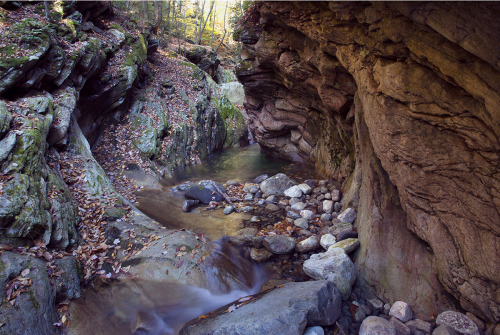
    The dry grasses are not dead for me. A beautiful form has as much life at one season as another.

                                                                                                                   – Thoreau


    P_0301
  • I Couldn’t Say

    In keeping with our ongoing theme of asserting that creative expression often flows from a frustration with language as a stand-in for feelings, we offer this excerpt that artist Georgia O'Keefe included in a foreword to a catalog for an exhibition of her work:

    I found that I could say things with colour and shapes that I couldn’t say in any other way – things that I had no words for…

    [via]

    113 Autumn Reflections


  • And Only Then…

    Author Annie Dillard's telling observations on writing are relevant to creative endeavors generally.  As someone who spent years wandering through nature, searching without knowing what exactly I was looking for, this description is spot-on:

    At its best, the sensation of writing is that of any unmerited grace. It is handed to you, but only if you look for it. You search, you break your heart, your back, your brain, and then — and only then — it is handed to you.

    [via]

    3069
  • Alive

    Many, if not most, creative people – poets, musicians, artists – are motivated by a frustration with ordinary language as the sole means of communicating to others the sense of wonder they experience in the world around them.

    Came across this poetic insight attributed to the ancient Greek philosopher Thales of Miletus and which speaks to this feeling:

    The universe is alive, and has fire in it, and is full of gods.

    [via]

    3067
  • A Much Better Place

    Came across a TED talk by Lux Narayan who, on a whim, decided to analyze 2000 obituaries to see what, if anything, he could learn about life.  Though his conclusions are not specific to the creative community, they certainly deserve our consideration:

    We uncovered, many lessons from lives well-led, and what those people immortalized in print could teach us. The exercise was a fascinating testament to the kaleidoscope that is life, and even more fascinating was the fact that the overwhelming majority of obituaries featured people famous and non-famous, who did seemingly extraordinary things. They made a positive dent in the fabric of life. They helped.

    So ask yourselves as you go back to your daily lives: How am I using my talents to help society? Because the most powerful lesson here is, if more people lived their lives trying to be famous in death, the world would be a much better place.

    [via]