G. Steve Journal

Reflections on photography, art, beauty and the natural landscape.

  • Being In Uncertainties

    In her provocative book “Being Wrong – Adventures in the Margin of Error” author Kathryn Schulz explores, among other things, the mindset that often prevails in creative fields.

    She observes that “If error is a kind of accidental stumbling into the gap between representation and reality, art is an intentional journey to the same place” and goes on to quote poet John Keats writing to his brother about the same thing:

    … at once it struck me what quality went to form a Man of Achievement especially in literature and which Shakespeare possessed so enormously – I mean Negative Capability, that is when man is capable of being in uncertainties, Mysteries, doubts without any irritable reaching after fact & reason.

    She goes on to note that “If you listen to artists talk about their craft, this concept of “negative capability” – the ability to live comfortably in the presence of mystery and the absence of certainty – comes up with remarkable frequency.”
     

    P-0157
  • Pure Intuition

    An ongoing theme of these blog posts has been the role intellect plays in creative expression – "art" – versus emotion or intuition.  Here's a telling story from fine-art landscape photographer Andreas Gursky about ignoring his intellectual training and allowing instinct to prevail:

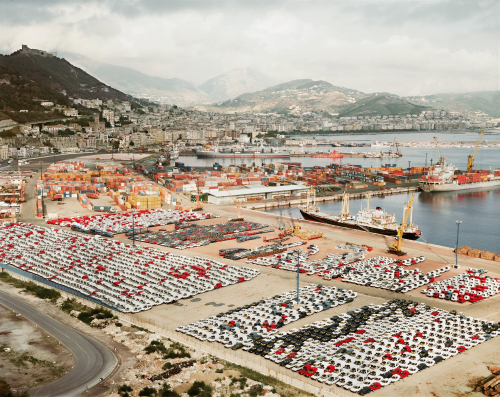
    It was 1990 and I was out driving with my family, sightseeing in and around Naples. Late in the afternoon, we came across this view over the harbour of Salerno. The sun was setting over the city so I had to hurry. I set up my tripod and my 4×5 inch camera, then took four frames. There was no time to weigh up whether it was worth it or not.

    Visually, everything was completely at odds with what I had been taught. My teachers, the conceptual artists Bernd and Hilla Becher, had told me to avoid photographing with sunlight, blue sky or strong shadows.

    I hadn’t been sure the photograph would work. I just felt compelled. It was pure intuition.

    Only when I got back home and put together the first contact sheet did I realise what I had. I saw immediately that pattern, that pictorial density, that industrial aesthetic. This image became an important piece for me, a turning point. It opened up a new sense of possibility, stylistically and thematically

    [via]


    Gursky
  • Don’t Hold Your Breath

    It's very easy to delay the start of a project until conditions are "just right," or refrain from releasing work until it's "perfect."  Sadly, that often means the creative output – song, poem, photo – is never shared at all.  Singer/songwriter Bjork counsels us to view the creative process more like a pipeline that needs always to flow if it is to remain open:

    Like, don’t hold your breath for five or seven years and not release anything, and then you’ve just got clogged up with way too much stuff…Maybe you’ve gained some immaculate, perfect versions of some of the songs, but overall, I think there’s more minus to that because of how you clog your own flow. You lose contact to the part of you, your subconscious, that’s writing songs all the time, and the part of you that’s showing it to the world. As much similarity between those two parts of you, I think, the better. That’s more important, to sustain that flow, than to wait until things are perfect.

    [via]


    P-0315
  • Inner Impulse

    Coming across a post in Maria Popova's blog, I recalled a Fresh Air interview years ago with then bandleader and trumpet player on Johnny Carson's The Tonight Show, Doc Severinsen.  When host Terry Gross asked him about the source of his inspiration he became uncomfortable and deflected the question. 

    When she pressed him, he expressed reluctance and gave an ambiguous explanation that revealed that not only was he somewhat superstitious about dissecting the source of his talent, but also not sure if he had an answer.

    Popova's post in her eclectic Brain Pickings blog contained this telling excerpt:

    …Polish poet Wisława Szymborska considers why artists are so reluctant to answer questions about what inspiration is and where it comes from:

    "It’s not that they’ve never known the blessing of this inner impulse. It’s just not easy to explain something to someone else that you don’t understand yourself."


  • In The Path

    I cannot cause light; the most I can do is try to put myself in the path of its beam.

    Annie Dillard

  • True Harvest

    Recently came across this observation by naturalist and author Henry David Thoreau and wondered if the sentiment he expresses – the feeling he describes– is ultimately the motivation that drives us to artistic expression:

    Perhaps the facts most astounding and most real are never communicated by man to man. The true harvest of my daily life is somewhat as intangible and indescribable as the tints of morning or evening.


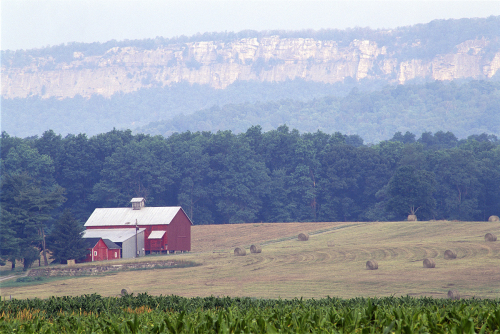
    215 Wallkill Barn

  • Unbroken Code

    In her book “Pilgrim At Tinker Creek" Annie Dillard reflects upon the nature of beauty:

    Beauty itself is the language to which we have no key; it is the mute cipher, the cryptogram, the uncracked, unbroken code. And it could be that for beauty… there is no key… [that it] will never make sense in our language but only in it’s own…


    P-0083

  • Merely An Instrument

    Commenting on her work and her writing, author and environmentalist Rachel Carson made an observation that seems to be true of many fields of endeavor, especially creative pursuits:

    The heart of it is something very complex, that has to do with ideas of destiny, and with an almost inexpressible feeling that I am merely an instrument through which something has happened — that I’ve had little to do with it myself.

    [via]


    3066


  • Your Own Belief

    The perennial adage directed at artists to find their own voice is reprised here by filmmaker Christopher Nolan:

    You have to cross into this world of just pleasing yourself, just doing something because you want to do it. It was a very valuable lesson. The truth is you have to hang on to your own belief. At the end of the day, all you really have is your own belief, your own passion. You can't ignore the feedback. But you tell the story because you love it.

    [via]

  • Find Ourselves

    Art that speaks to any of us always comes from a very particular place,

    and then we find ourselves in it in some kind of way.

                       – Elizabeth Alexander

    [via]

    IMG_4821