G. Steve Journal

Reflections on photography, art, beauty and the natural landscape.

Category: New Paltz, NY

  • Perfection

    As cameras continue to get better and better, it's not surprising when we photographers become overly obsessed with performance: lens resolution, megapixels, DMax…etc. until we can't see the forest for the trees! At the end of the day, we have to remind ourselves that these tools, as good as they are, cannot provide the most vital component of any image – creative expression.  As Ansel Adams once remarked on the subject: "I've seen a lot of sharp photos and fuzzy concepts."

    Here's a provocative observation from renowned cellist Yo Yo Ma on the subtle but important distinction between perfection and expression:

    For Ma, the tedium of the flawless performance taught him that there is often a tradeoff between perfection and expression.  "If you are worried about not making a mistake, then you will communicate nothing," he says.  "You will have missed the point of making music, which is to make people feel something."


    3054
  • “Breathed Upon”

    Artists often credit an external source for their creativity. What I didn't know until I read Imagine was how prevalent this notion was in the past:

    "… until the Enlightenment, the imagination was entirely synonymous with higher powers: being creative meant channeling the muses, giving voice to the ingenious gods. (Inspiration, after all, literally means "breathed upon.")

    238
  • Imagine

    Just finished reading Jonah Lehrer's fascinating new book: Imagine: How Creativity Works. It's well-written and full of behind-the-scenes examples how the creative process has been observed in situations from all walks of life – the arts, business, education…etc.

    Though it's clear there is not just one way to tap into the creative portion of one's own mind, Lehrer's book does provide convincing anecdotal evidence that, for example, a diligent approach to problem-solving is not often the best one.  Instead, putting aside a problem may allow our minds to arrive at a creative solution that would otherwise not be considered … food for thought…


  • Making Sense

    I recently spoke to a photography club and, in preparation, was reviewing some materials I've collected over the years that disucuss different aspects of the medium.  I planned to talk about what makes a photograph work and wanted to draw an important distinction between the photograph as a document and the photograph as artistic expression.

    In a back issue of Aperture magazine (#186) I found an interview with photographer Stephen Shore who, I think, summed it up perfectly:

    Some regard the photograph as a finger pointing at content and not a creative expression in itself.  That's the distinction between a photograph and an illustration.  I guess what it comes down to is: an illustration is aiming the camera at the direction of some content, while the photograph is making sense of it.


    433
  • Nostalgia

    A segment on NPR this week on the return of the show Mad Men featured a clip of the character Don Draper, played by Jon Hamm, making an inspired pitch about the Kodak carousel projector. It's really an homage to the magic and seduction of photography.

    In his pitch, Draper talks about using nostalgia as a way to create a "deeper bond with the product … it's delicate , but potent…"

    "…nostalgia literally means the pain from an old wound … it's a twinge in your heart far more powerful than memory alone. It's a time machine – goes backwards, forwards…  it takes us to a place where we ache to go again…"

  • Peace

    Usually, when I try to explain how I decide to frame a scene in the camera's viewfinder I have trouble describing exactly what it is I am trying to do –– what I am looking for.  In the past I've simply said I pay attention to the edges of the frame until "the image resolves itself." True enough but not sure how helpful that is.

    Well, I came across another description of the process and, though it may not add much to the discussion in terms of specifics, it struck me as a more elegant description of what occurs at the moment a photographer decides that's the shot. It's from John Szarkowski's introduction to the book: "William Eggleston's Guide:"

    "… a photographer wants form, an unarguable right relationship of shapes, a visual stability in which all components are equally important. The photographer hopes, in brief, to discover a tension so exact that it is peace."


    3070
  • Irreducible

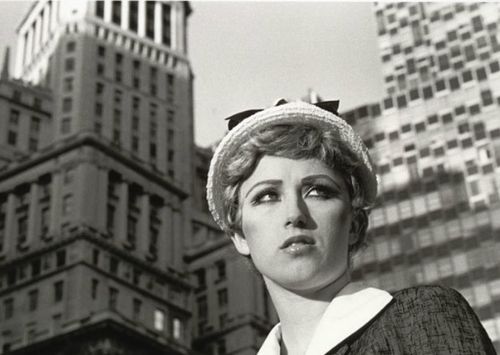
    I enjoyed reading the sentiments expressed in Peter Schjeldahl's review of the Cindy Sherman retrospective at MOMA.  For those not familiar with Sherman, for the past 30 years she has created photographic self-portraits dressed as someone else, for example, Queen Elizabeth or Marilyn Monroe.

    The intellectual vogue is long over, though the pedantry lingers, presuming that the mysteries of Sherman's art – photographs that are like one-frame movies, which she directs and acts in – demand special explanation. (She is remarkably tolerant of interviewers who keep asking her what she means, as if, like any artist, she hadn't already answered in the only way possible for her: in the work.)  But the mysteries are irreducible.

    Sherman2
  • Paradise

    Last month I came across two separate reminders to pay attention to the "ordinary" days that seem to fly by more quickly than ever.

    Here's author Rudy Rucker from a recent interview talking about the paintings of Bruegel:

         ... his pictures evoke a sense of the divine nature of the physical world. Everything is alive. We're in paradise, if only we pay attention.

    And from an NPR radio interview, Alexander Payne, director of the movie The Descendants: 

        … life is .. a collection of extraordinary, ordinary moments.  We just need to pay attention to them all — wake up and pay attention to how beautiful it all is.


  • How Many Other Things…?

    Just came across this remarkable post at High Existence:

    A man sat at a metro station in Washington DC and started to play the violin; it was a cold January morning. He played six Bach pieces for about 45 minutes. During that time, since it was rush hour, it was calculated that 1,100 people went through the station, most of them on their way to work. 

    Three minutes went by, and a middle aged man noticed there was musician playing. He slowed his pace, and stopped for a few seconds, and then hurried up to meet his schedule. A minute later, the violinist received his first dollar tip: a woman threw the money in the till and without stopping, and continued to walk. A few minutes later, someone leaned against the wall to listen to him, but the man looked at his watch and started to walk again. Clearly he was late for work. 

    In the 45 minutes the musician played, only 6 people stopped and stayed for a while. About 20 gave him money, but continued to walk their normal pace. He collected $32. When he finished playing and silence took over, no one noticed it. No one applauded, nor was there any recognition. 

    No one knew this, but the violinist was Joshua Bell, one of the most talented musicians in the world. He had just played one of the most intricate pieces ever written, on a violin worth $3.5 million dollars. 

    Two days before his playing in the subway, Joshua Bell sold out at a theater in Boston where the seats averaged $100. 

    This is a real story. Joshua Bell playing incognito in the metro station was organized by the Washington Post as part of a social experiment about perception, taste, and priorities of people. The outlines were: in a commonplace environment at an inappropriate hour: Do we perceive beauty? Do we stop to appreciate it? Do we recognize the talent in an unexpected context? 

    One of the possible conclusions from this experience could be: 

    If we do not have a moment to stop and listen to one of the best musicians in the world playing the best music ever written, how many other things are we missing?

  • Primordial Images

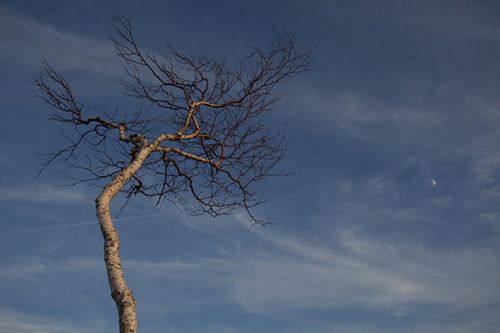
    "Whoever speaks in primordial images speaks with a thousand voices; he enthralls and overpowers, while at the same time he lifts the idea he is seeking to express out of the occasional and the transitory into the realm of the ever-enduring"

    I'm not sure Jung had photographic images in mind when he wrote this, but I thought it accurately described images we have all seen that are iconic — that transcend a subject and speak to a more universal truth — timeless.


    3056