“I do not wish to comment on the work; if it does not speak for itself, it is a failure.”
- George Orwell
Reflections on photography, art, beauty and the natural landscape.
“I do not wish to comment on the work; if it does not speak for itself, it is a failure.”
- George Orwell
Last year Krista Tippet, the host of the radio show On Being, interviewed marketer Seth Godin, asking about his perspective on art in the digital age. Not surprisingly, Godin's responses were interesting, informative and in keeping with his previous writings on the subject.
I found one comment in particular to be spot on:
Art is by people who have a compass, rather than a map — who have an understanding of true north and are willing to solve a problem in an interesting way.

Visitors to the gallery who are familiar with the area are often momentarily overcome by emotion when they view certain images. I came across a column by Roger Cohen in the NY TIMES that may help explain that reaction:
In a… recent essay in The London Review of Books, called “On Not Going Home,” James Wood relates how he “asked Christopher Hitchens, long before he was terminally ill, where he would go if he had only a few weeks to live. Would he stay in America? ‘No, I’d go to Dartmoor, without a doubt,’ he told me. It was the landscape of his childhood.”
It was the landscape, in other words, of unfiltered experience, of things felt rather than thought through, of the world in its beauty absorbed before it is understood, of patterns and sounds that lodge themselves in some indelible place in the psyche and call out across the years.
Beauty slips through the door of our rational thought and gets us to see the world differently.
–– Sarah Lewis
from a talk at the New York Public Library, March 26, 2014.(thanks, BP)
Timothy Egan, in an interesting NY TIMES op-ed column yesterday, examined the creative process:
Here’s how John Lennon wrote “Nowhere Man,” as he recalled it in an interview that ran just before he was murdered in 1980: After working five hours trying to craft a song, he had nothing to show for it. “Then, ‘Nowhere Man’ came, words and music, the whole damn thing as I lay down.”
An original work, an aha! product or a fresh insight is rarely the result of precise calculation at one end producing genius at the other. You need messiness and magic, serendipity and insanity. Creativity comes from time off, and time out. There is no recipe for “Nowhere Man,” other than showing up, and then, maybe lying down.
And here’s how Oscar Wilde defined his profession: “A writer is someone who has taught his mind to misbehave.”
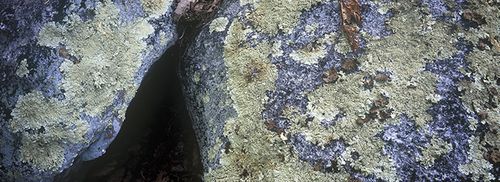
It's only natural that when one becomes determined to better understand and practice any creative art — music, painting, photography – the first steps inevitably involve trying to emulate the professional results one admires.
I see this a lot when I look online at photographers offerings. On the one hand, it's encouraging and entertaining to see the evolution of vision as the photographer becomes ever more adept at using the available tools to yield the perfect image.
The flip side of this determination, however, is that the photographer never finds a way to make the vision meaningful — the results continue to be about duplicating a pre-conceived ideal scene — for example a snow-capped mountain and it's reflection in a foreground lake: though lovely, it's really more of a technical achievement than a creative one.
As artist Chuck Close observed, of all the creative arts, photography is the easiest one to master and the hardest one in which to find one's unique voice. I came across this quote that I think is an apt description of the mind set one must cultivate in order to transcend the cliches and find one's personal vision:
Whatever it is you're seeking won't come in the form you're expecting.
Haruki Murakami
From an fascinating interview with musician Linda Perhacs on NPR, who recorded an album 40 years ago that sold very few copies, only to have it recently re-emerge as a cult favorite:
Our human fads are so temporary and they come and go so quickly. The things that last have a greater balance with these things that are more eternal. I always want to go to the universe and use things that have a timeless quality, that match the eons, that match the flow of nature. My music comes to me, usually, like rain: It's a fast flood. It pours from above my head, through my head, and I have to race to get pencil and paper to catch it.

From a recent review by Ken Johnson in the NY TIMES of a photography show at the Morgan:
Art museums impose certain ways of seeing. They favor a divide-and-compartmentalize approach. They institute separate departments for painting and sculpture, prints and drawings, architecture and design and photography. They separate high from low, professional art from folk art and tribal art from modern art and supposedly important artists from unimportant ones. Museum exhibitions frame their contents within familiar categories like style, historical period, genre and so on. These forms of administration restrict thoughts, associations and interpretations to certain prescribed ranges of relevance. They rationalize seeing and thinking.
What an artist is trying to do for people is bring them closer to something, because of course art is about sharing: you wouldn’t be an artist unless you wanted to share an experience, a thought. I am constantly preoccupied with how to remove distance so that we can all come closer together, so that we can all begin to sense that we are the same, we are one.
David Hockney
