G. Steve Journal

Reflections on photography, art, beauty and the natural landscape.

Author: G. Steve Jordan

  • Sincere Sentiment

    From an letter written by Van Gogh about the importance of honesty in art:

    Do you know that it is very, very necessary for honest people to remain in art? Hardly anyone knows that the secret of beautiful work lies to a great extent in truth and sincere sentiment.

    [thanks, Brain Pickings]

  • Light and Shadow

    Photographers who chase storms always seemed to me to be just geeky thrill-seekers, but I'll have to reconsider after reading a portion of an interview with Mitch Dobrowner in which he describes his motivation:

    I have always loved just sitting out in nature, hearing the wind blow and watching the light changing. I study the light and see photography as an exercise in painting with light and shadows. In inclement weather, light and shadows are always changing. … When I’m out there I always hear the mantra spoken by Edward Abbey, “Our job is to record, each in his own way, this world of light and shadow and time that will never come again exactly as it is today.”

    (thanks Dish)


    3205
  • In Spite of Myself


    Time and again artists, when asked about creativity, describe giving themselves over to an indefinable muse –– one that leads away from preconceived notions.  Here's an excerpt on that subject from Pablo Picasso:

    Ideas are simply starting points. I can rarely set them down as they come to my mind. As soon as I start to work, others well up in my pen. To know what you’re going to draw, you have to begin drawing… When I find myself facing a blank page, that’s always going through my head. What I capture in spite of myself interests me more than my own ideas.

    (thanks Brain Pickings)

  • Just The Start

    The Library of Congress announced Thursday that the nation's next poet laureate will be Charles Wright, a retired professor at the University of Virginia.

    On whether his sources of inspiration have changed over the decades:
    Not really. It's always been the idea of landscape that's around me, that I look at; the idea of the music of language; and then the idea of God, or of that spiritual mystery that we doggedly follow, some of us, all of our days, and which we won't find the answer to until it's too late — or maybe it's not too late. Maybe it's just the start, I don't know.

    (Thanks, NPR)


    3069
  • Nothing

    Asked their opinion of the art world, many will complain they don’t understand it, referring to the conceptual nature of many contemporary works.  Clearly one facet of art should be to provoke thought — to have the viewer think or apprehend the world differently. However reliance on intellect to “understand” art is often responsible for the tortured logic artists rely on to defend their work.

    Performance artist Marina Abramovic’s piece “512 Hours” opens in a London Gallery this week and consists of nothing but an empty room and the artist. Though it has already had the effect the artist may have been seeking –– controversy and subsequent discussion — Abramovic’s defense of her idea of a gallery with nothing in it sounds like a clip from an old episode of Seinfeld:

    “From my point of view, it’s difficult for anyone to claim nothing,” Ms. Abramovic said dryly. “I think it’s a misunderstanding anyway. It’s not that I’m doing nothing — quite the opposite. It’s just that there is nothing except people in the space. But now we are getting letters every day from people who did nothing first. It seems to have become something.”

  • You Don’t Know


    Browsing the Explore website and came across this excellent observation excerpted from an interview with British psychoanalytical writer Adam Phillips. Though Phillips' comments refer to music, they hold true for any successful creative expression:

    The emotional impact of music is so incommensurate with what people can say about it, and that seems to be very illustrative of something fundamental—that very powerful emotional effects often can’t be articulated. You know something’s happened to you but you don’t know what it is.

  • Do Not Explain

    Came across an excerpt from a letter by Pablo Picasso that echoes the idea highlighted in many of these blog posts, namely that an intellectual approach to art often misses what the work is about:

    Everyone wants to understand painting. Why don’t they try to understand the song of the birds? Why do they love a night, a flower, everything which surrounds man, without attempting to understand them? Whereas where painting is concerned, they want to understand. Let them understand above all that the artist works from necessity; that he, too, is a minute element of the world to whom one should ascribe no more importance than so many things in nature which charm us but which we do not explain to ourselves. Those who attempt to explain a picture are on the wrong track most of the time.


    Lost City Tree Study

  • Serendipity


    Came across this provocative video by photographer Jordan Matter (thanks petapixel) about embracing the fickle nature of on-location photography, which I pursued commercially for many years, and looking for and being open to alternative options — aka serendipity — when the assignment starts going south:

    I expect serendipity to guide my creative process. No matter how high the stakes, I rarely plan out or storyboard my shoots. Instead, I rely on my instincts to see the spontaneous opportunities around me. 


    3113

  • Quite Astonished

    Listening to All Things Considered on NPR one recent morning about Winston Churchill’s 1921 essay, “Painting as a Pastime” where he writes about how his new hobby changed the way he viewed the world.  No doubt this is true of any creative enterprise — as composer John Cage once remarked: “An artist’s job is to pay attention.”

    Here’s what Churchill discovered:

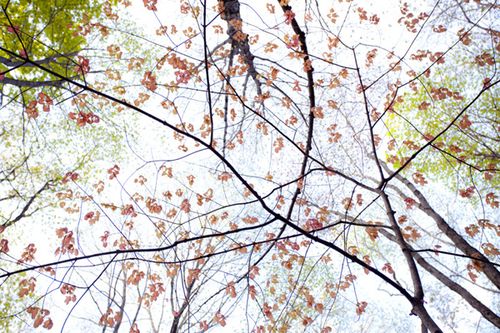
    One is quite astonished to find how many things there are in the landscape and in every object in it. One never noticed before so many colors on the hillside, each different in shadow and in sunlight, such brilliant reflections in the pool, each a key lower than what they repeat, such lovely lights gilding or silvering surface or outline, all tinted exquisitely with pale color – rose, orange, green or violet. And I had lived for over 40 years without ever noticing any of them.

  • Hopelessly Lost

    From an article in the NY TIMES about composer John Luther Adams, another example of an artist's experience that has relevance to all creative endeavors, especially photography:

    “I’m highly suspicious of political art,” he said. “I’m not a propagandist. I’m not trying in my music to teach a lesson or tell a story. I’m trying to discover a place and invite you into that landscape to find your own way and — if I’m lucky — get hopelessly lost in it.”

    “Music is not what I do; it’s how I understand the world.” “We don’t really create anything except answers to creation. Everything that we do, everything that we think, and everything that we think we create ultimately derives from this incredibly rich and complex and diverse world that we live in. It’s impossible for us to separate who we are from where we are.”


    3217