G. Steve Journal

Reflections on photography, art, beauty and the natural landscape.

  • Unique Vision

    It's only natural that when one becomes determined to better understand and practice any creative art — music, painting, photography –  the first steps inevitably involve trying to emulate the professional results one admires.  

    I see this a lot when I look online at photographers offerings.  On the one hand, it's encouraging and entertaining to see the evolution of vision as the photographer becomes ever more adept at using the available tools to yield the perfect image.  

    The flip side of this determination, however, is that the photographer never finds a way to make the vision meaningful — the results continue to be about duplicating a pre-conceived ideal scene — for example a snow-capped mountain and it's reflection in a foreground lake:  though lovely, it's really more of a technical achievement than a creative one.

    As artist Chuck Close observed, of all the creative arts, photography is the easiest one to master and the hardest one in which to find one's unique voice. I came across this quote that I think is an apt description of the mind set one must cultivate in order to transcend the cliches and find one's personal vision:

    Whatever it is you're seeking won't come in the form you're expecting.
                        

                                                                            Haruki Murakami

  • The Flow Of Nature


    From an fascinating interview with musician Linda Perhacs on NPR, who recorded an album 40 years ago that sold very few copies, only to have it recently re-emerge as a cult favorite:

    Our human fads are so temporary and they come and go so quickly. The things that last have a greater balance with these things that are more eternal. I always want to go to the universe and use things that have a timeless quality, that match the eons, that match the flow of nature. My music comes to me, usually, like rain: It's a fast flood. It pours from above my head, through my head, and I have to race to get pencil and paper to catch it.


    2424

  • Ways of Seeing

    From a recent review by Ken Johnson in the NY TIMES of a photography show at the Morgan:

    Art museums impose certain ways of seeing. They favor a divide-and-compartmentalize approach. They institute separate departments for painting and sculpture, prints and drawings, architecture and design and photography. They separate high from low, professional art from folk art and tribal art from modern art and supposedly important artists from unimportant ones. Museum exhibitions frame their contents within familiar categories like style, historical period, genre and so on. These forms of administration restrict thoughts, associations and interpretations to certain prescribed ranges of relevance. They rationalize seeing and thinking.

  • So Clever

    Came across this pithy quote that describes most artist's statements:

    “I am so clever that sometimes I don't understand a single word of what I am saying.”                                                                                                                     ― Oscar Wilde

    Thanks Goodreads

  • Sharing

    What an artist is trying to do for people is bring them closer to something, because of course art is about sharing: you wouldn’t be an artist unless you wanted to share an experience, a thought. I am constantly preoccupied with how to remove distance so that we can all come closer together, so that we can all begin to sense that we are the same, we are one.
                                                                                                                                David Hockney


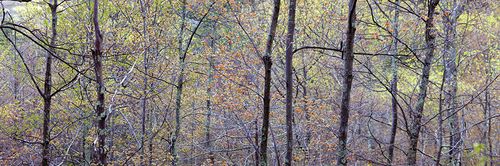
    CloveWinterPano

  • See


    “We don’t see things as they are, we see them as we are.”

                                            Anais Nin


    4050

  • You Know…

    In a recent interview discussing her new novel about a photographer, author Anna Quindlen made this observation about the creative process:

    That's the dangerous game of producing art; that, especially in this information age, there's a sense that taste is not what you bring to the table, taste is what other people tell you it is, whether they're critics or sales figures or the like. And I think that when you produce any kind of art, there has to be that moment when you know that it's good.

  • It Belongs

    A recent issue of Photo District News included an essay on noted photographer Harry Callahan's influence on his colleague, photographer Emmet Gowin.

    Apparently, Gowin shot some street photographs in the style of Callahan's earlier work. When Callahan later saw them, he remarked: "I wish I could've done all of those. There was a time I could have and now I can never go back to where I was."

    "This is a very important thing for young artists to know,"Gowin said, "to be in the time and place which is appropriate.  That which is appropriate – which is to say, that which is your property.  Something is proper to me, it's right for me, it's near my core, it belongs to my emotional orientation.


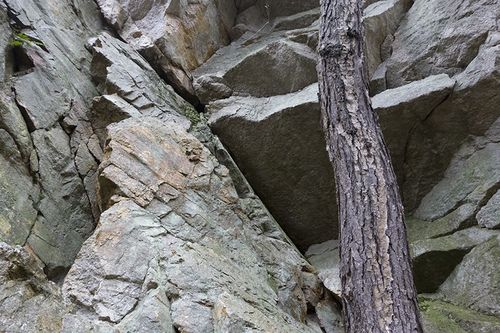
    _DSC0142
  • Seasoning

    From an interview with George Saunders in the Paris Review about his new book, Tenth of December:

    So much of that process [ of writing] is intuitive. Just deciding minute-by-minute, over and over again, over the period during which you’re writing the story. Sort of like seasoning to taste or something like that. I think that’s one of the maybe under-discussed aspects of process … the quality of the split-second decisions you made…I just know from experience that my instincts are better than my cerebration.

  • Working Rightly

    Alan Watts [1915 – 1973] was, for many, the author who first introduced eastern philosophy to western readers, and in a very accessible way.  Here's an excerpt on a theme we've explored many times in this blog –– "instinct" vs. intellect.  One finds almost universal agreement among artists, poets, musicians that, when at the peak of creativity, intellect takes a back seat:

    Working rightly, the brain is the highest form of “instinctual wisdom.” Thus it should work like the homing instinct of pigeons and the formation of the fetus in the womb — without verbalizing the process or knowing “how” it does it. The self-conscious brain, like the self-conscious heart, is a disorder, and manifests itself in the acute feeling of separation between “I” and my experience. The brain can only assume its proper behavior when consciousness is doing what it is designed for: not writhing and whirling to get out of present experience, but being effortlessly aware of it.