G. Steve Journal

Reflections on photography, art, beauty and the natural landscape.

  • Transience

    Not entirely sure, but I think this helps explain the attraction we have (I have) to photography — as a way of "stopping time" and, in so doing, not only keeping it from advancing into the future but also allowing us to more closely examine the precious captured moment…

    “Is there anything we know more intimately than the fleetingness of time, the transience of each and every moment?” 

                                                                                                                                 —— Rebecca Goldstein
  • Running Over

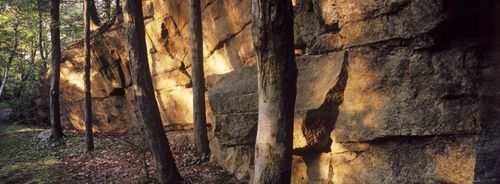
    Another telling and poetic excerpt from the work of author Annie Dillard:

    This, then is the extravagant landscape of the world, given, given with pizzazz, given in good measure, pressed down, shaken together, and running over.

    [Pilgrim at Tinker Creek]

  • Pure Devotion

    Author Annie Dillard's observation about living in the present is equally descriptive of the artist's ideal state of mind when creating or performing:

    What I call innocence is the spirit’s unself-conscious state at any moment of pure devotion to any object. It is at once a receptiveness and total concentration.

    [ from Pilgrim at Tinker Creek]


    2366
  • Always Ideal

    Advice worth heeding, literally as well as metaphorically:

    …take the path of natural light. Embrace the idea that the conditions will never be ideal, which of course makes them always ideal. Because the thing about natural light is that whatever it is, is.

                                                                                                                                    –– Seth Godin

  • Passionate Suspicion

    This sentiment, this magnetic pull towards discovery, is true of any creative endeavor:

    Nothing whets the intelligence more than a passionate suspicion, nothing develops all the faculties of an immature mind more than a trail running away into the dark.

                                                                                                                               –– Stefan Zweig

    [thanks, Goodreads]

  • The Way You See…

    “To me, photography is an art of observation. It’s about finding something interesting in an ordinary place… I’ve found it has little to do with the things you see and everything to do with the way you see them.”

                                                                                                                            –– Elliott Erwitt

    [thanks, Frank Beacham]


    3051New

  • Feelings

    Whether he is an artist or not, the photographer is a joyous sensualist, for the simple reason that the eye traffics in feelings, not in thoughts.
                                                                                                                                –– Walker Evans


    P-0445

  • What Is Beautiful

    An excerpt from a Bill Moyers interview some time ago with author Barry Lopez:

    …there are certain things that people say you shouldn't talk about, because it makes people nervous.

    The things that make us uncomfortable in public are a person who wishes to speak of what is beautiful. That makes everybody a little bit nervous, because many of us keep this jaded, cynical separateness with the world, because we're cautious. We're cautious. How many people do you know whose crying out is for intimacy? They want to be known. They want to be touched. But they can't make that intimate connection without being vulnerable. You have to be vulnerable in order to achieve this exchange of intimacy. And you can't be vulnerable unless you can trust the situation. And what we're learning, many of us, is the world is not trustworthy enough for you to be vulnerable to it and gain that intimacy.

  • It Is Peace

    In the introduction to "William Eggleston's Guide," John Szarkowski, Director of Photography at MOMA at the time, brilliantly describes what photographers are attempting when searching for and composing an image:

    …a photographer wants form, an unarguably right relationship of shapes, a visual stability in which all components are equally important. The photographer hopes, in brief, to discover a tension so exact that it is peace.


    1073

  • What Art Does…

    In actor and author Wendell Pierce's book, "The Wind In The Reeds" about post-Katrina New Orleans, he recounts his experience acting in the play "Waiting For Godot" and how it resonated with Lower Ninth Ward residents who had lost everything.

    The play's director, Paul Chan, asked if it helped achieve social justice or political change, replied that it did not:

    It brought people together, yes, but he was trying to bring about "articulate speechlessness." He went on: "My mind was cleared for something else to happen, which I think is what art does.  If you do it right, that's what happens."