G. Steve Journal

Reflections on photography, art, beauty and the natural landscape.

  • Timeless Delight


    The kinds of truth that art gives us many, many times are small truths. They don't have the resonance of an encyclical from the Pope stating an eternal truth, but they partake of the quality of eternity. There is a sort of timeless delight in them.

                                                                                                                                –– Seamus Heaney

    [via]

    3099
  • Get Out of the Way

    If you get out of the way of your work, your work will tell you exactly what it needs. Usually your work is much more forward-thinking than you are. Half of what we do, we're doing almost intuitively. It's later that we really understand what we've actually done or why we've done something a certain way.

                                                                                           — Carrie Mae Weems

  • Unknowable Aspects

    Echoing David Lynch's observations from an earlier post, filmmaker Stanley Kubrick on language as an anemic and unsatisfying medium of creative expression:

    There are certain areas of feeling and reality…or unreality or innermost yearning, whatever you want to call it…which are notably inaccessible to words. Music can get into these areas. Painting can get into them. Non-verbal forms of expression can. But words are a terrible straitjacket…. There's a side to the human personality that somehow senses that wherever the cosmic truth may lie, it doesn't lie in A, B, C, D. It lies somewhere in the mysterious, unknowable aspects of thought and life and experience.

    [via]

     [3234]

  • Heartbeat of Life

    Jack Kerouac's writing, and often Tom Wolfe's as well, is routinely criticized for it's stream-of-consciousness format; as Truman Capote once described it: "That's not writing, that's typing."

    Yet it is this very quality – an immediate and non-cognitive response to the world – that has made Walt Whitman a beloved, and much imitated, American poet:

    The secret of it all, is to write in the gush, the throb, the flood, of the moment…to put things down without deliberation…without worrying about their style…without waiting for a fit time or place. I always worked that way. I took the first scrap of paper, the first doorstep, the first desk, and wrote, wrote, wrote… By writing at the instant the very heartbeat of life is caught.

    [via]

  • Words Are Not There

    When you finish anything, people want you to then talk about it. And I think it’s almost like a crime. A film or a painting…each thing is its own sort of language and it’s not right to try to say the same thing in words. The words are not there. The language of film, cinema, is the language it was put into, and the English language…it’s not going to translate. It’s going to lose.

                                                                                                                    –– David Lynch

    [via]

    3153


  • Going Together

    Filmmaker David Lynch's observation is not only true generally, but is often the key to the creative process:

    Life is filled with abstractions and the only way we make heads or tails of it is through intuition. Intuition is seeing the solution. It’s emotion and intellect going together.

    [via]

  • Kind of Life


    In my grandparents' time, it was believed that spirits existed everywhere…in trees, rivers, insects, wells, anything… I like the idea that we should all treasure everything because spirits might exist there, and we should treasure everything because there is a kind of life to everything.

                                                                                                                                                –– Hayao Miyazaki

    [via]

    3196
  • The Other

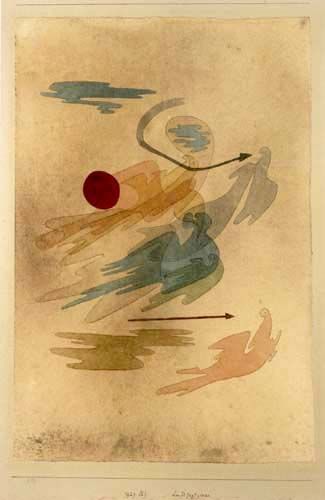
    One eye sees, the other feels.

                         – Paul Klee


    Eye Feels 2


    [via]

  • Relax!

    Here's an observation by author Aldous Huxley ("Doors of Perception" ,"Brave New World") regarding the paradox of creativity: reconciling the discipline of doing the work with the necessity of allowing room for the artistic and intuitive subconscious to kick in:

    Take the piano teacher…he always says, Relax, relax. But how can you relax while your fingers are rushing over the keys? Yet they have to relax. The singing teacher and the golf pro say exactly the same thing. And in the realm of spiritual exercises we find that the person who teaches mental prayer does too. We have somehow to combine relaxation with activity… The personal conscious self being a kind of small island in the midst of an enormous area of consciousness… What has to be relaxed is the personal self, the self that tries too hard, that thinks it knows what is what, that uses language. This has to be relaxed in order that the multiple powers at work within the deeper and wider self may come through and function as they should. In all psychophysical skills we have this curious fact of the law of reversed effort: the harder we try, the worse we do the thing.

    [via]

  • Pick The Flowers


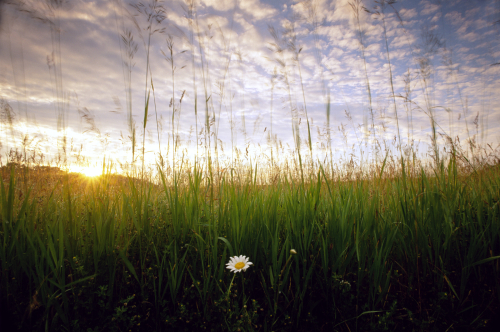
    Because the world is so full of death and horror, I try again and again to console my heart and pick the flowers that grow in the midst of hell.

                                                                                                                                –– Hermann Hesse


    150 Daisy Sunrise