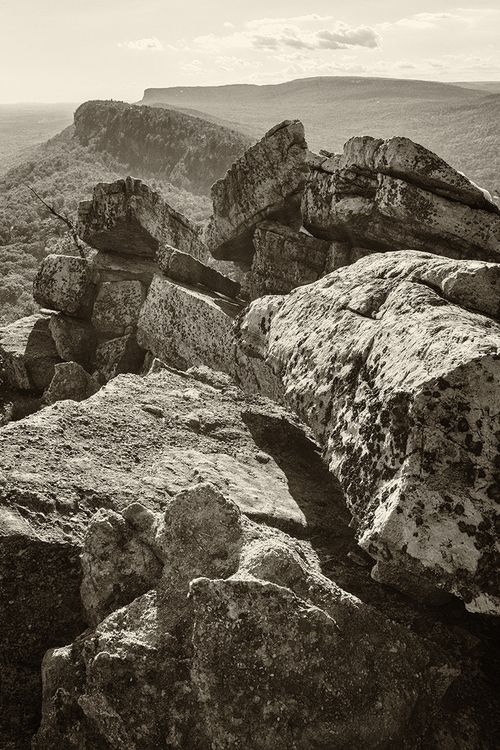
We stand before a work of art and our spirit is lifted by it: amazing that someone is like us! We stand before a work of art and our spirit resists: amazing that someone is different!
–Tilda Swinton
[thanks Explore]
Reflections on photography, art, beauty and the natural landscape.
It’s the artist’s responsibility to balance mystical communication and the labor of creation.
–– Patti Smith
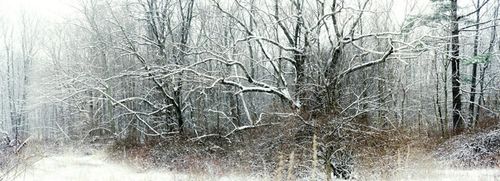
If a writer or artist creates from a place of truth and spirit and generosity, then I may be able to enter and ride this person’s train back to my own station. It’s the same with beautiful music and art.
Beauty is meaning.
anne lamott
Being an artist is not just about what happens when you are in the studio. The way you live, the people you choose to love and the way you love them, the way you vote, the words that come out of your mouth, the size of the world you make for yourselves, your ability to influence the things you believe in, your obsessions, your failures — all of these components will also become the raw material for the art you make.
artist Teresita Fernández
“Our task is not to find the maximum amount of content in a work of art… Our task is to cut back content so that we can see the thing at all.”
Susan Sontag
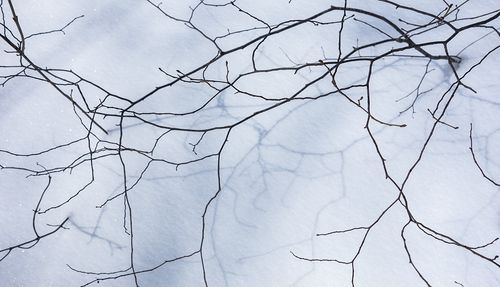
From a commencement address delivered by designer Greil Marcus:
What’s the impulse behind art? It’s saying in whatever language is the language of your work, “If I could move you as much as it moved me … if I can move anyone a tenth as much as that moved me, if I can spark the same sense of mystery and awe and surprise as that sparked in me, well that’s why I do what I do.”
The "Lens" section of the NY TIMES presents an eclectic collection of photographs that range from previously unknown images by famous photographers to the latest offerings of shooters just starting out, including a recent piece about Kristen Bedford who spent time in Philadelphia documenting the remaining followers of the late charismatic leader Father Divine. The way she described her approach to photography was what I found most interesting:
For me, photography is about showing up again and again to see what happens,” she said. “It’s about following those invisible lines of intuition that take you into places you can’t rationally explain. I’m open to walking into things I don’t understand, and maybe I’ll never understand. Through photography, I might get a glimpse of this unknown.
The creative instinct is, in its final analysis and in its simplest terms, an enormous extra vitality, a super-energy, born inexplicably in an individual, a vitality great beyond all the needs of his own living — an energy which no single life can consume. This energy consumes itself then in creating more life, in the form of music, painting, writing, or whatever is its most natural medium of expression. Nor can the individual keep himself from this process, because only by its full function is he relieved of the burden of this extra and peculiar energy….
–– Pearl S. Buck
Jumping between radio stations driving in this morning and came across a reading of a comic essay that appeared in the NEW YORKER a few years ago. It's about a caveman society and the narrator is describing life in the stone-age, including this tongue-in-cheek swipe at conceptual art:
Boog is very good at making words. For example, last week he showed off his new picture at the Main Cave. Everyone was expecting it to be a horse or a bear (all his pictures so far have been horses, bears, or a mix of horses and bears). But this picture was not of any animal. It was just a bunch of red streaks. People were angry.
“I wanted animals,” the Old Person said. “Where are the animals?”
It was bad situation. I thought that Boog would lose his job or maybe be killed by stones. But then Boog stood on a rock and spoke.
“My art is smart,” he said. “And anyone who does not get it is stupid.”
Everyone was quiet. We looked at the Old Person to see what he would say.
The Old Person squinted at the red streaks for a while. Then he rubbed his chin and said, “Oh, yes, now I get it. It is smart. People who do not get it are stupid.”
A few seconds later, everyone else got it.
“It is smart,” they said. “It is smart!”