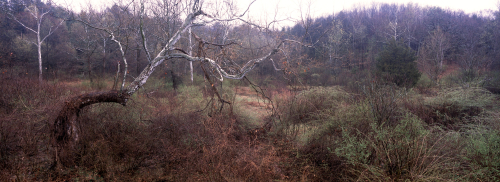
Everyone is inspired by a different muse, and you follow your muse
–– MAD magazine cartoonist Al Jaffe
[via]
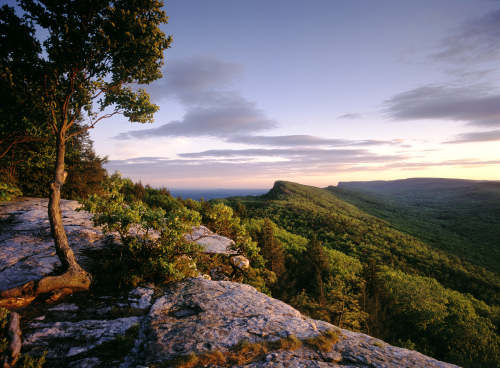
Reflections on photography, art, beauty and the natural landscape.
Life is sometimes hard. Things go wrong, in life and in love and in business and in friendship and in health and in all the other ways that life can go wrong. And when things get tough, this is what you should do.
Make good art.
I’m serious. Husband runs off with a politician? Make good art. Leg crushed and then eaten by mutated boa constrictor? Make good art. IRS on your trail? Make good art. Cat exploded? Make good art. Somebody on the Internet thinks what you do is stupid or evil or it’s all been done before? Make good art. Probably things will work out somehow, and eventually time will take the sting away, but that doesn’t matter. Do what only you do best. Make good art.
–– Neil Gaiman
[via]
There may be as many reasons explaining what motivates a person to express themselves creatively as there are artists, but one of those reasons has to be the desire to, as Julia Margaret Cameron once recorded: "…arrest all beauty that came before me."
Recently came across some excerpts from the writings of Viktor Frankl that perhaps explains that desire more fully:
…it is not only the uniqueness of an individual life as a whole that gives it importance, it is also the uniqueness of every day, every hour, every moment that represents something that loads our existence with the weight of a terrible and yet so beautiful responsibility! … [W]hat we achieve by seizing the moment is, once and for all, rescued into reality… In truth, it has actually been preserved, in the sense of being kept safe….the reality that we have rescued into the past in this way, can no longer be harmed by transitoriness.
[via]
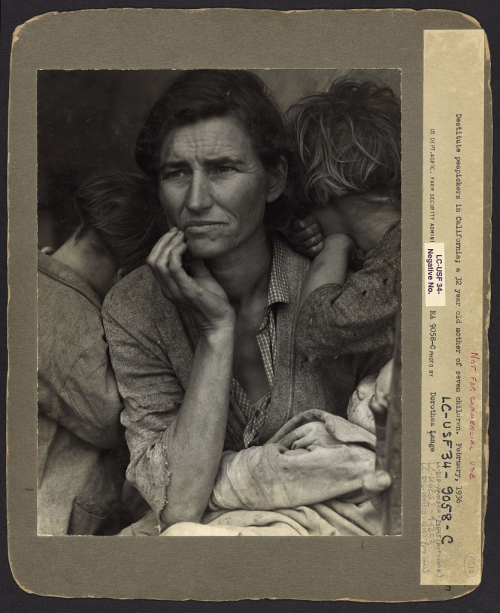
Depression-era photographer Dorothea Lange chronicled the era for the Farm Security Administration and created one of the iconic images of that time, "Migrant Mother."
In a recent virtual presentation, MoMA curator Sarah Meister reveals that Lange displayed in her studio, the following quote from Francis Bacon:
The contemplation of things as they are
without substitution or imposture
without error or confusion
is in itself a nobler thing
than the whole harvest of invention.
[via]
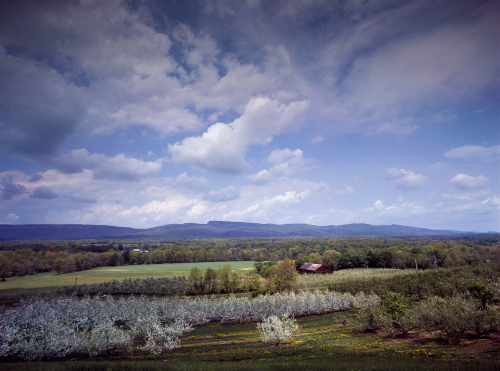
Songwriter Andrew Bird on how he writes a song:
It’s kind of a racket. When I step onstage I feel myself adopting that comedian’s posture, a shrug of the shoulders that says, “I don’t know, folks. We’re all just puzzling through it together. I’m not going to pretend to have the answers but here’s what I’ve seen.”
To emerge from creative hibernation with my perfect oeuvre and worldview fully realized feels stifling and boring. And while I’m anything but an exhibitionist I have this perverse impulse to introduce half-written songs and invite the trouble that it might bring. Maybe I’m saying to my former teachers, “Look, by your standards I’m failing, but it feels great.” But mostly it’s that I just prefer a fluid questioning present to a fixed past.
[via]
To celebrate his 90th birthday, the NY TIMES re-published a 2017 interview of lyricist Stephen Sondheim by playwright Lin Manuel Miranda, which included this bit of creative advice:
Sondheim: …you know, it’s the old lesson, you’ve got to work on something dangerous. You have to work on something that makes you uncertain. Something that makes you doubt yourself.
Miranda: Talk a bit about that danger and uncertainty.
Sondheim: Well, because it stimulates you to do things you haven’t done before. The whole thing is if you know where you’re going, you’ve gone, as the poet says. And that’s death.
Art critic for THE NEW YORKER Peter Schjeldahl writes about how we might apprehend the Old Masters paintings when the pandemic is over and we're once again able to visit museums:
Here’s a prediction of our experience when we are again free to wander museums: Everything in them will be other than what we remember. The objects won’t have altered, but we will have, in some ratio of good and ill. The casualties of the coronavirus will accompany us spectrally. Until, inevitably, we begin to forget, for a while we will have been reminded of our oneness throughout the world and across time with all the living and the dead. The works await us as expressions of individuals and of entire cultures that have been—and vividly remain—light-years ahead of what passes for our understanding. Things that are better than other things, they may even induce us to consider, however briefly, becoming a bit better, too.
[via]
Time and again we learn of artists who, in attempting to explain the creative process, can only suggest that it's mysterious … ineffable. The conventional wisdom is that, although inspiration can't be willed into existence, it does require the artist to consciously make a space for it to reveal itself.
Here's musician Robbie Robertson from the opening scene of the movie about The Band, "Once Were Brothers":
I don’t have much of a process of, like, thinking about this and now I’m going to write a song and it’s going to be about that…. A lot of times, the creative process is trying to catch yourself off-guard , and you sit down and you’ve got a blank canvas and you don’t know what you're going to do, and you just see what happens.
We're currently in the midst of the COVID-19 pandemic – the Coronavirus outbreak – and one's thoughts understandably skew darker during these uncertain times.
Though it may be challenging to achieve, Henry David Thoreau wisely counseled cultivating an optimistic outlook:
I know of no more encouraging fact than the unquestionable ability of man to elevate his life by a conscious endeavor. It is something to be able to paint a particular picture, or to carve a statue, and so to make a few objects beautiful; but it is far more glorious to carve and paint the very atmosphere and medium through which we look … To affect the quality of the day, that is the highest of arts.
The sentiment expressed here by marketer Seth Godin seems especially relevant to artists trying to find their own voice…
Other than multiple-choice, this is one of the easiest ways to work through a test or a workday.
Find the blanks, fill them in.
Here’s the question: Who decided what the blanks were?
We get to write our own, any time we choose.
Life’s actually an essay, not a series of responses to someone else’s agenda.
[via]