G. Steve Journal

Reflections on photography, art, beauty and the natural landscape.

Category: Photography

  • Takes Two

    In an interview in Design Arts Daily about collecting photographs, Michelle Marsh Dunn observes that:

    " I operate under Minor White’s philosophy that the viewer is as responsible as the photographer for activating an image…"

    What an interesting and insightful perspective!

    3055

  • Far Beyond

    In a recent CHRONOGRAM book review of David Rothenberg's "Survival of the Beautiful" the reviewer closes with the author's intriguing conclusion:

    "There is meaning in nature far beyond use; there is form and beauty far beyond function."

    2408
  • No Reason

    If you could say it in words, there would be no reason to paint

                                                                        Edward Hopper

  • Discovery

    A few weeks ago I posted an excerpt from a column by the TIMES Frank Bruni about appreciating the world at hand.  After Bruni's piece was published, he writes in his blog that a reader sent in passage from T. S. Eliot that makes a similar observation: 

    We shall not cease from exploration
    And the end of all our exploring
    Will be to arrive where we started
    And know the place for the first time.


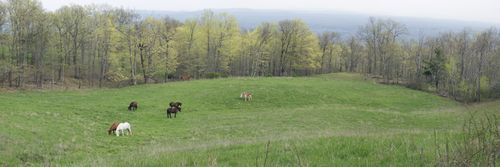
    Horses
  • A True Photograph

    A true photograph need not be explained, nor can it be contained in words

                                                                                                Ansel Adams

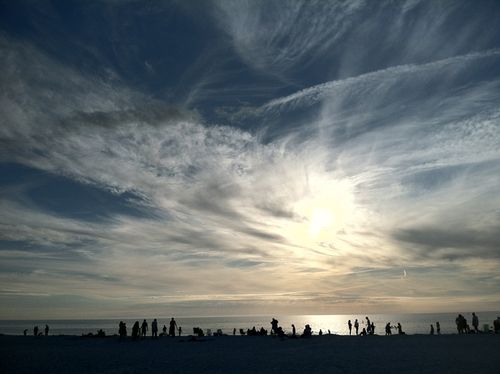
    BeachSml
  • Time, Distance and Clarity

    Frank Bruni's excellent op-ed column in today's TIMES is about his regrets for not being fully present as he made his way in the world.  As one year ends and a new one is around the corner, it's an opportune time for all of us to consider his call to be more aware and appreciative of our surroundings.  He writes:

    "… it’s also true that we’re often just plain oblivious to the scenery right in front of us. By being closest, it’s farthest away."

    Very true…


  • Inexplicable

    I was leafing through the second edition of MOMA Highlights – 350 Works From the Museum of Modern Art New York and came across the early (1943) Jackson Pollack painting, "The She Wolf." It's a very layered, busy and disturbing image in which the editors claim "… [Pollack's] focus is a compound of mythology and an iconography of the unconscious."

    However they go on to note that Pollack himself made no such assertions:

    "She-Wolf came into existence because I had to paint it.  Any attempt on my part to say something about it, to attempt explanation of the inexplicable, could only destroy it."

  • Images are…

    The December 5th issue of the NEW YORKER features a column about the new film "The Artist" — a silent film.

    "People come nervous to it," the film's writer-director, Michel Hazanavicius, said recently … "They're afraid it's going to be intellectual.  But it's language that is intellectual — images are about feelings."

  • … set it aside.

    Marketing guru and generally wise human Seth Godin has a great post today on his blog entitled "Tools vs. Insight" in which he makes an important distinction:

    Knowing about a tool is one thing. Having the guts to use it in a way that brings art to the world is another. Perhaps we need to spend less time learning new tools and more time using them.

    Every week I speak with someone in the gallery who has conflated the tool – in this case the camera – with the creative process and is convinced they need the newest one to allow them to adequately express themselves. I often suggest that Keith Richards (or any legendary guitarist) could go down the street to the Salvation Army store, purchase a guitar for $25 and make you wish you could find a guitar as good as that one.

    Vasari's "Lives of the Artists," contains the observation: "Learn the craft, then set it aside."  Exactly.

  • Exception to the Standard

    Just wanted to share a spot-on excerpt from todays blog post by marketing guru Seth Godin.  As usual, he's made the distinction between what we may tell ourselves (as artists or otherwise) and what it is we really need to keep in mind:

    The other day, after a talk to some graduate students at the Julliard School, one asked, "In The Dip, you talk about the advantage of mastery vs. being a mediocre jack of all trades. So does it make sense for me to continue focusing on mastering the violin?"

    Without fear of error, I think it's easy to say that this woman will never become the best violinist in the world. That's because it's essentially impossible to be the one and only best violinist in the world. There might be 5,000 or 10,000 people who are so technically good at it as to be indistinguishable to all but a handful of orchestra listeners. This is true for many competitive fields–we might want to fool ourselves into thinking that we have become the one and only best at a technical skill, but it's extremely unlikely.

    The quest for technical best is a form of hiding. You can hide from the marketplace because you're still practicing your technique. And you can hide from the hard work of real art and real connection because you decide that success lies in being the best technically, at getting a 99 instead of a 98 on an exam.

    What we can become the best at is being an idiosyncratic exception to the standard. Joshua Bell is often mentioned (when violinists are mentioned at all) not because he is technically better than every other violinst, but because of his charisma and willingness to cross categories. He's the best in the world at being Josh Bell, not the best in the world at playing the violin.