G. Steve Journal

Reflections on photography, art, beauty and the natural landscape.

Author: G. Steve Jordan

  • Dogma

    Nothing is more dangerous than a dogmatic worldview – nothing more constraining, more blinding to innovation, more destructive of openness to novelty.

                                                                                      ––  Stephen Jay Gould

  • Messy Inspiration

    There's a fascinating piece in the NY TIMES about the role our surroundings may exert on our creative efforts — namely that the creative process may be stimulated by a cluttered, messy environment.

    Test subjects were placed in either a neat and organized space, or a cluttered, disorganized space and then asked to generate creative ideas — the results?

    When we analyzed the responses, we found that the subjects in both types of rooms came up with about the same number of ideas, which meant they put about the same effort into the task. Nonetheless, the messy room subjects were more creative, as we expected. Not only were their ideas 28 percent more creative on average, but when we analyzed the ideas that judges scored as “highly creative,” we found a remarkable boost from being in the messy room — these subjects came up with almost five times the number of highly creative responses as did their tidy-room counterparts.

    While cleaning up certainly has its benefits, clean spaces might be too conventional to let inspiration flow.

  • Fluid Questioning

    Musician Andrew Bird's behind-the-scenes look at his creative process (from an article in the NY TIMES)

    It’s kind of a racket. When I step onstage I feel myself adopting that comedian’s posture, a shrug of the shoulders that says, “I don’t know, folks. We’re all just puzzling through it together. I’m not going to pretend to have the answers but here’s what I’ve seen."

    To emerge from creative hibernation with my perfect oeuvre and
    worldview fully realized feels stifling and boring. And while I’m
    anything but an exhibitionist I have this perverse impulse to introduce
    half-written songs and invite the trouble that it might bring. Maybe I’m
    saying to my former teachers, “Look, by your standards I’m failing, but
    it feels great.” But mostly it’s that I just prefer a fluid questioning
    present to a fixed past.

  • No Map

    Just stumbled upon a wise, and true, observation about creativity by my favorite marketing guru: 
            
    “The reason that art
    (writing, engaging, and all of it) is valuable is precisely why I can’t
    tell you how to do it. If there were a map, there’d be no art, because
    art is the act of navigating without a map.”
                                                                                                                            ~Seth Godin
    2287
  • Sing It!

    The short essay I wrote for our 2014 calendar points out the important distinction between competence and creative expression — just because one is able to use the tools does not mean the end result is worth the effort.  This seems especially true of photography, where the tools get ever more hi-tech.

    I came across an older post from Seth Godin's blog that speaks to that very same sentiment:

    I spent some time a few days ago listening to a nascent band performing classic rock songs.
    The first group sang a note-for-note rendition of a song by the Stones. The notes were right, but nothing else was. The singer didn’t know what the song meant. And the musicians, they just stood there. No energy, no smiles, no connection. It could have been a funeral with a great soundtrack.

    The funny thing is that learning to Sing It is a lot easier than learning how to play the guitar. For some reason, we work on the technique before we worry about adding the joy.

    If you’re going to go to all the trouble of learning the song and performing it, then SING IT. Sing it loud and with feeling and like you mean it. Deliver it, don’t just make it. When you answer the phone or greet me at your office or come to a meeting or write something, don’t bother if all you’re going to do is do it. Sing it or stay home.

  • Moonbeams

    Quite often, when visitors to the gallery are deciding on a purchase, they are attracted at first to a particular photograph but then feel the need to view more of them before circling back to their original selection.  What's interesting is that, when they then seek to describe why they came back to their original choice, words fail them — they can't articulate specific reasons – they just do.

    I came across a quote by author Steven King, about the subtle art of the opening sentence, that helps explain why gallery customers may have such trouble talking about their choice:

                   "To get scientific about it is a little like trying to catch moonbeams in a jar."

  • Magic

    Here's an excerpt from an interview with photographer Camille Seaman in a recent issue of Parabola magazine:

    I suspect there are things we don't have words for.  And if you have a certain quality of sensitivity, they are felt, but no one knows how to talk about it.

    Exactly, exactly.  It's that intangible. Part of the magic of an artist is being able to draw from the intangible and create a physical. That's magic, truly, because you're literally reaching into a void and drawing energy and making something…"


    2159
  • Nothing New…

    From the blog Futility Closet:

    I am astonished at the foolish music written in these times. It is false
    and wrong and no longer does anyone pay attention to what our beloved
    old masters wrote about composition. It certainly must be a remarkably
    elevated art when a pile of consonances are thrown together any which
    way.

    I remain faithful to the pure old composition and pure rules. I have
    often walked out of the church since I could no longer listen to that
    mountain yodeling. I hope this worthless modern coinage will fall into
    disuse and that new coins will be forged according to the fine old stamp
    and standard.

    – Samuel Scheidt, to Heinrich Baryphonus, Jan. 26, 1651

  • Good Enough

    Our western culture places a premium on achieving ever greater measures of success which, paradoxically, can intimidate us from taking the first, crucial steps towards a goal — fear of failure can often prevent forward progress. 

    I came across an interesting interview in the NY TIMES with Jan Filochowski, chief executive of Great Ormond Street Hospital in London, one of the world’s top children’s hospitals, where he talks about the importance of constructively dealing with failure, as opposed to trying to avoid it:

    Q. We have to make mistakes to become better managers?

    A. I’m a huge believer in the 80/20 rule. As long as you get more things right than you get wrong, that’s O.K. And if you wait until you get everything right, you’ll never do anything. You’ll be perfect, but indecisive, and you will fail big-time. That’s one of the things I learned. It’s about achieving not just the O.K. but the good enough. If you focus on the good enough, you get better and better. If you wait to get from the good to the great, I don’t think you’ll ever get to the good.

  • Possibility!

    Many landscape photographers attempt to emulate the results of images already seen, perhaps with slight variations.  We all do this, which is why it's so difficult to bring anything new to the table, especially when visiting an iconic and much photographed area – the Grand Canyon, for example.

    If one has the time, however, and is able to get the cliches out of the way, it is possible to transcend the scene that everyone has seen and realize one's own vision.  That's not to say it's easy, since the objective becomes very amorphous: wander around searching for something you don't know you are looking for.

    The only upside is that the process then becomes one of discovery — more exciting than documentation:

    “If I were to wish for anything, I should not wish for wealth and power, but for the passionate sense of the potential, for the eye which, ever young and ardent, sees the possible. Pleasure disappoints, possibility never. And what wine is so sparkling, what so fragrant, what so intoxicating, as possibility!”

                                                                                                                          – Søren Kierkegaard
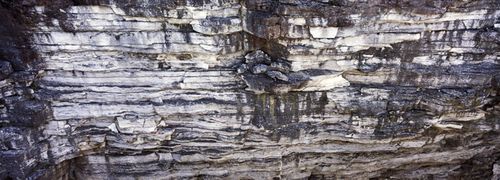
     

    Pool